
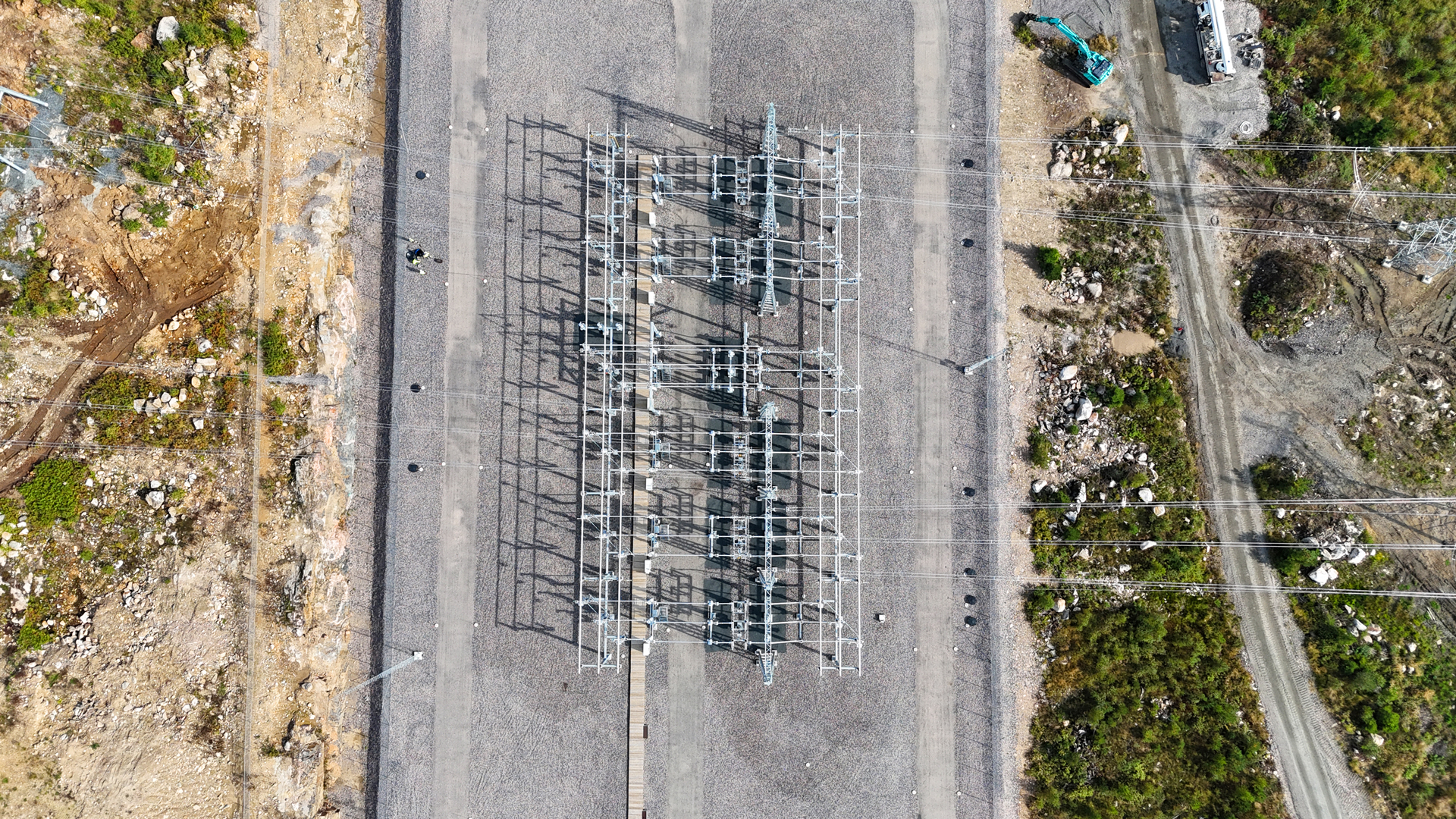
A BESS tender document usually specifies the power, the volume, the duration and the warranties. What it doesn’t highlight are the critical engineering decisions that can meaningfully change cost and performance for a BESS projects, sometimes the value of these decisions is not even realised until it’s too late.
Here is what NYAB learned matters once a project moves past the tender stage.
Choosing the right system configuration
One of the biggest decisions a developer face and one that’s rarely reviewed at the tender stage is how the battery, inverter, and transformer are packaged together. With the technology at hand, there are three distinct configuration options, each with a different set of trade-offs.
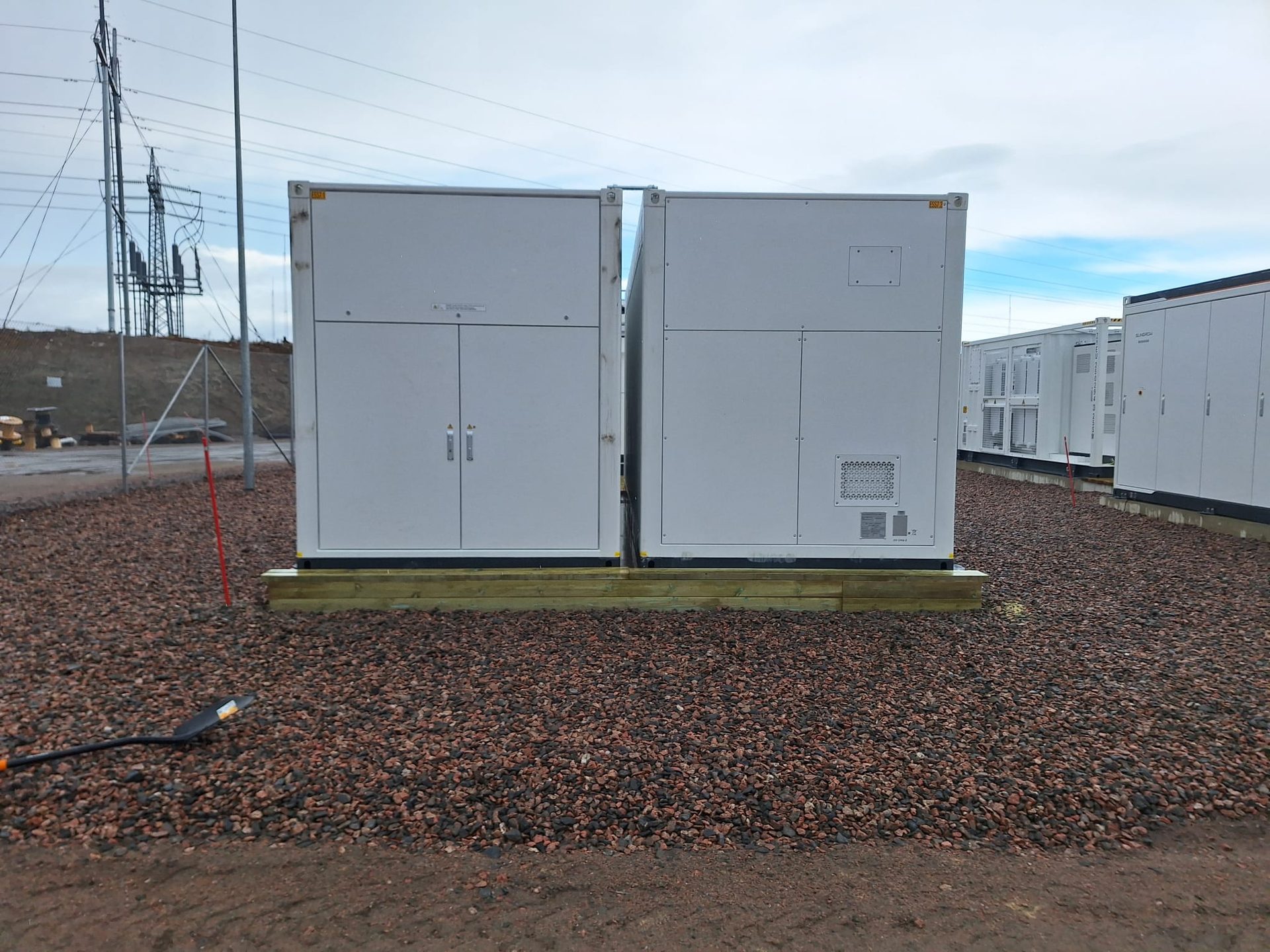

Option 1: PCS integrated in the BESS container.
Battery racks and the inverter sit inside the same enclosure, with a separate transformer unit outside. This is the most compact option smallest footprint, smallest foundations, least field cabling, and the fastest install, with fewer crane lifts and shorter crane routes. The trade-off is redundancy and flexibility: if the PCS fails, there’s less redundancy since power electronics and battery cells share one enclosure, and resizing or changing the PCS rating later typically means replacing the whole unit.
To steer away from this drawback, it can be critical to make strategic decisions on the duration of the BESS along with ensuring that the manufacturer is able to support with any PCS failure on both fronts – services and financially.
Option 2: BESS with MV skid.
Batteries sit in their own containers, while the PCS and step-up transformer share a dedicated skid or pad, forming a power block that can serve multiple battery containers. This decouples the power-conversion equipment from the battery fire zone, which can help reduce fire risk, and one central inverter connecting to multiple battery units reduces the number of MV connection points needed. The PCS or transformer can also be swapped or upgraded later without touching the batteries, or vice versa.
The cost of this flexibility is a larger footprint, extensive DC cabling between batteries and the skid, and still a significant additional component to crane-lift, which increases crane routes and reinforcement needs. Another cost can be the lack of software integration which might occur due hardware components potentially procured from different manufacturers.
Option 3: Fully separate.
Battery containers, PCS, and the MV transformer are three distinct, independently sited pieces of equipment. This gives maximum flexibility on storage-to-power ratio and vendor mix, makes it easiest to phase or resize the system later, allows batteries to be positioned furthest from anything with oil or MV arcing risk, and gives the easiest individual maintenance access to each component. The costs are high, though: this is the largest footprint and most civil and cabling work of the three options, the most crane moves and lift points during installation, and the most interconnection losses plus the most equipment to individually space out for fire clearance.
None of these three is universally right. It depends on the site, the suppliers chosen, regulatory requirements, these considerations finally decide on which system to use.
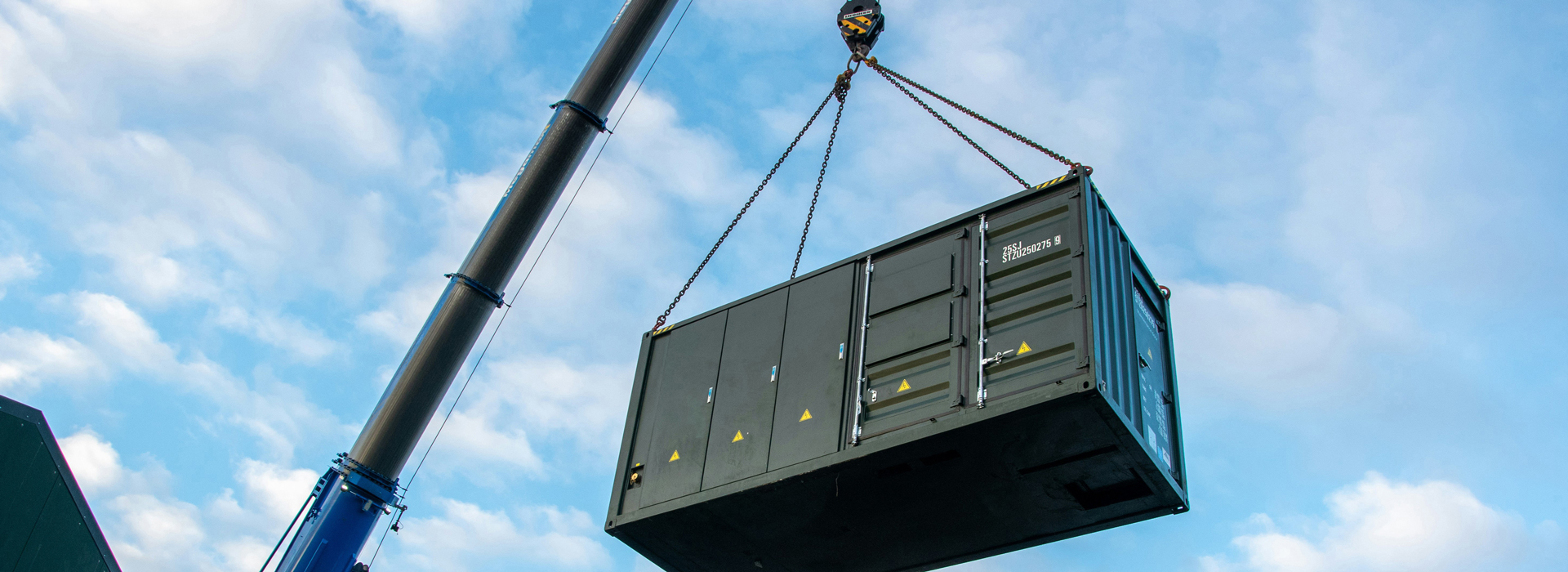
SCADA and control architecture: more than a monitoring system
SCADA along with the underlying control architecture gets treated in a lot of early-stage planning as an afterthought something to specify later, however this can lead to a lot of unexpected costs in future as SCADA is the system that determines whether a battery can participate in the markets it was designed for.
Response time requirements vary significantly across markets, and the SCADA and control architecture must be built for the fastest one the project intends to serve. FCR-type products can demand sub-second response to a frequency deviation, while mFRR or capacity markets operate on activation windows measured in minutes. A platform specified only for slower balancing markets will might be unable to participate in faster ancillary service markets later, and then it doesn’t depend on the battery hardware itself the bottleneck becomes the control system, not the asset.
This gets more complicated because the requirements aren’t static. Grid codes, market rules, and communication protocols are actively evolving; new bidding formats, changing minimum activation times, new data reporting standards and a SCADA platform designed only to the regulatiaon in place at commissioning can find itself unable to comply a few years later without a costly retrofit. Building in the flexibility to adapt to regulatory change, rather than hard coding to today’s rulebook, is one of the areas where a small amount of extra design effort upfront avoids a much larger cost down the line.
This matters even more for a project intending to revenue-stack across FCR, aFRR, and wholesale trading: the SCADA and EMS layer needs the flexibility to switch dispatch strategy in near real time, and to keep pace with each of these markets.
A crucial part in the project execution, both relevant for selection of PCS and Control system, is the Grid code compliance approval in the Nordics. It can be time-consuming, particularly for hybrid plants, where the control systems of several components need to be integrated. Compliance activities should therefore start early in the project execution.
Grounding and electrical design: a critical aspect to get right
Grounding design rarely is something that is taken to be a key design element during the preliminary design phase but during a failure it gets everyone’s attention immediately. BESS sites have grounding requirements that differ meaningfully from a typical solar or wind installation, because of the DC-side architecture, the density of power electronics, and the fault current characteristics of battery systems under different failure modes.
Getting this wrong doesn’t just create a safety risk. It can trigger protection nuisance tripping, complicate fault diagnosis, and in the worst case, contribute to more severe equipment damage during an actual fault event. This is one of the areas where following a generic template from a different asset class rather than designing specifically for the electrical characteristics of the battery system in question causes the most avoidable problems.
None of these issues show up as a line item in a tender comparison. They show up in commissioning delays, in warranty disputes, in underperformance relative to the financial model months or years after the decision that caused them was made. The decisions that matter most are often the ones that don’t show up on a spec sheet.
Interested to learn more?
Contact our energy team to discuss how NYAB approaches detailed BESS engineering and design.

Johannes George
Project Manager
Solar & BESS, Sweden
+46 76 764 44 81
Send e-mail

Leo Wallin
Head of Major projects
Sweden
+46 (0)70 415 26 02
Send e-mail