
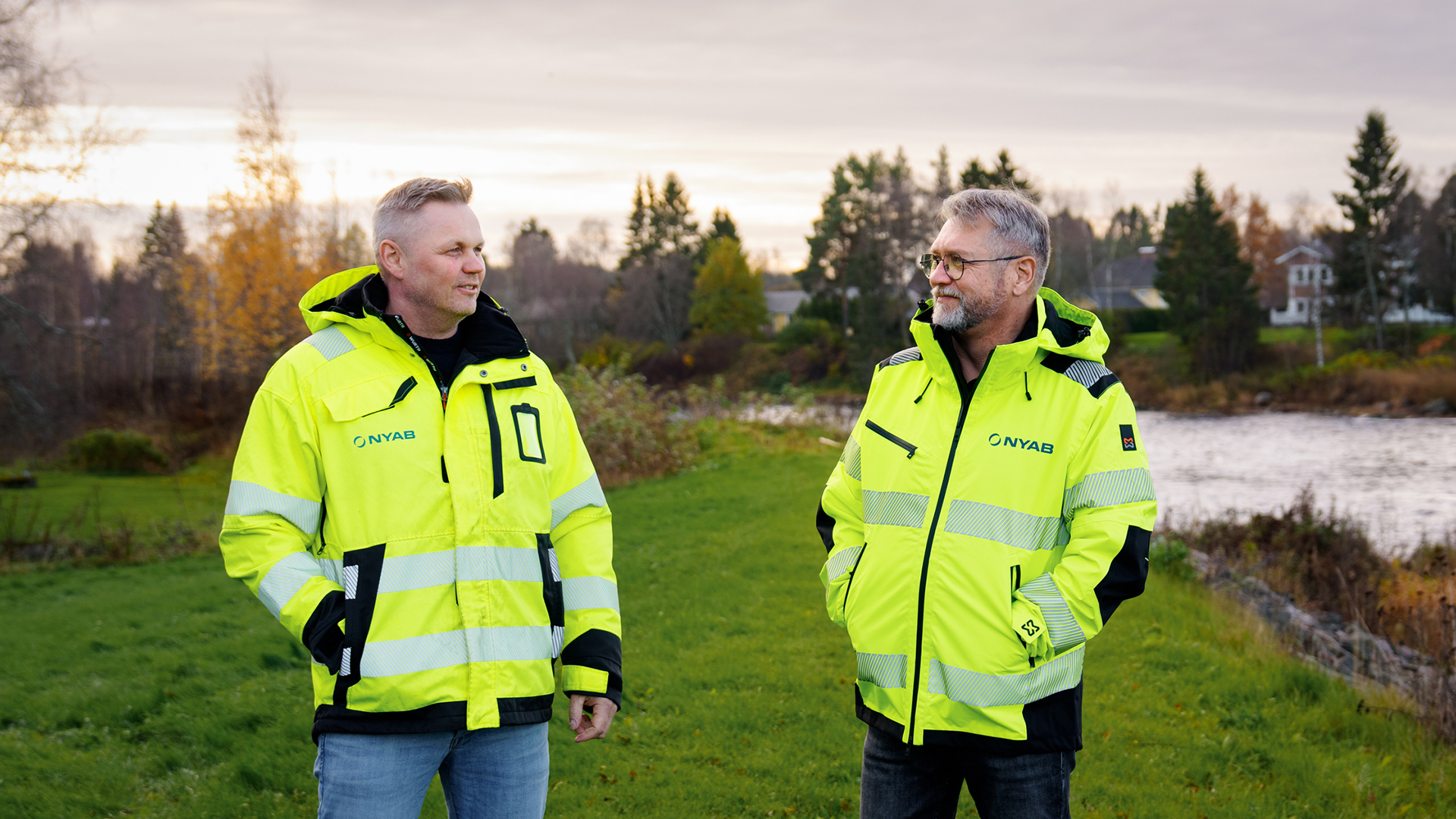
At NYAB, career development can mean further education, increased responsibility, taking on a new business area, or even working in another country. Petri Leppilampi and Seppo Nuorala share how their roles have evolved over the years.
When Petri Leppilampi had been working at NYAB for around five years, his career reached a turning point. By then, he already had more than 35 years of experience in the construction industry, and decades of physically demanding work were beginning to take their toll.
“My body started pushing back, and it could no longer handle the work in the same way as before,” says Leppilampi.
NYAB began looking for a new direction for the experienced carpenter. An opportunity arose for Leppilampi to train for a site management role through an apprenticeship while continuing to work.
“Everyone was very understanding of my situation, and I received a great deal of support and encouragement from my managers. Even after completing my training, I have received a lot of help from my skilled colleagues,” he says.
Leppilampi’s role shifted from practical construction work to managing construction sites. Previously, he carried out tasks such as formwork and finishing work himself. Today, he is responsible for ensuring that people, machinery, schedules and upcoming work phases all work together smoothly on site.
NYAB operates within infrastructure, industrial and energy construction. Leppilampi primarily works on construction, industrial and water infrastructure projects.
“I have taken on more responsibility, but learning new things has been very rewarding. The best part has been seeing how a team works together, even on large-scale projects,” says Leppilampi.
A new role brought the opportunity to create something new
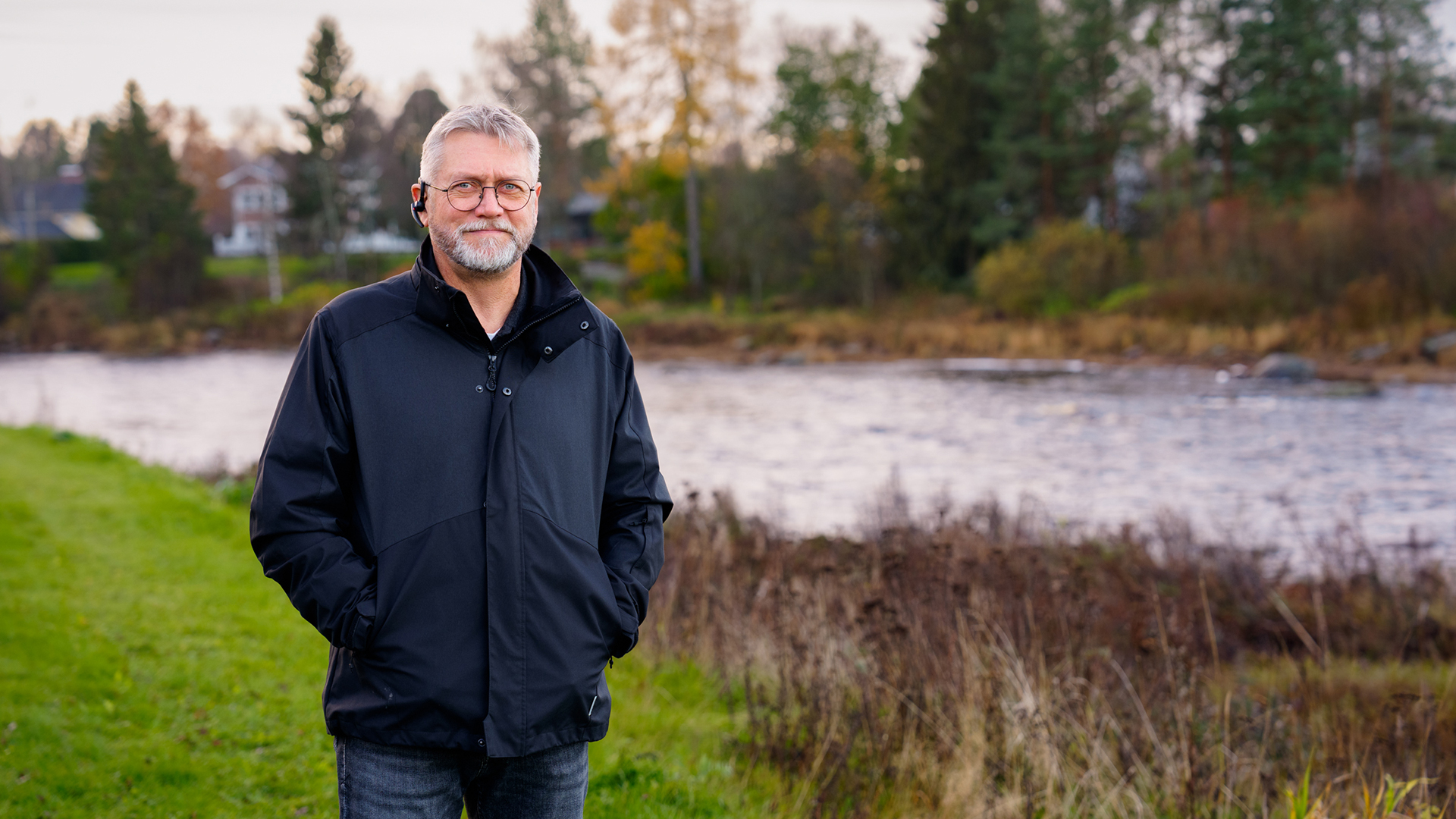
The role of Seppo Nuorala, Project Manager, has also changed significantly over the years.
His history with NYAB and its predecessor companies stretches back more than 20 years. During that time, Nuorala spent four years working for another group before returning to NYAB in a completely new position.
Nuorala worked for many years as a project manager within infrastructure construction, but after returning to NYAB he moved into solar power projects. His current role includes leading large-scale solar park projects and site organisations, preparing tenders, and working closely with clients.
Previously, his work focused on managing a single construction site and solving day-to-day challenges. Projects were often shorter and teams smaller than they are today.
“Now, projects can last for several years and have significantly higher contract values,” he says.
Utility-scale solar parks combine multiple areas of expertise, including civil engineering, electrical installations and substation construction.
“I never imagined I would get to work on something like this, because solar parks did not even exist when I started my career. I feel that we are pioneers in a way, because we are creating something new. That feels rewarding.”
You can take on responsibility, but you are never left to manage alone
Both Leppilampi and Nuorala consider it important that new opportunities have been introduced gradually throughout their careers. According to Nuorala, supportive managers have given employees room to grow into new roles.
“People are given opportunities here, encouraged to take on more responsibility and supported in further education,” he says.
Leppilampi also highlights the importance of being proactive. One of NYAB’s core principles is that employees can influence the direction of their own work.
“You also need to communicate where you want to go. You can take on responsibility if you want it.”
Alongside responsibility, support from colleagues is equally important. Solutions are developed together on site, and experience is shared across different areas of expertise.
“If someone has more experience in a particular area, they can share their knowledge with others. You keep learning all the time,” says Nuorala.
What motivates Nuorala most is the opportunity to learn from the professionals around him.
International assignments offer new learning opportunities
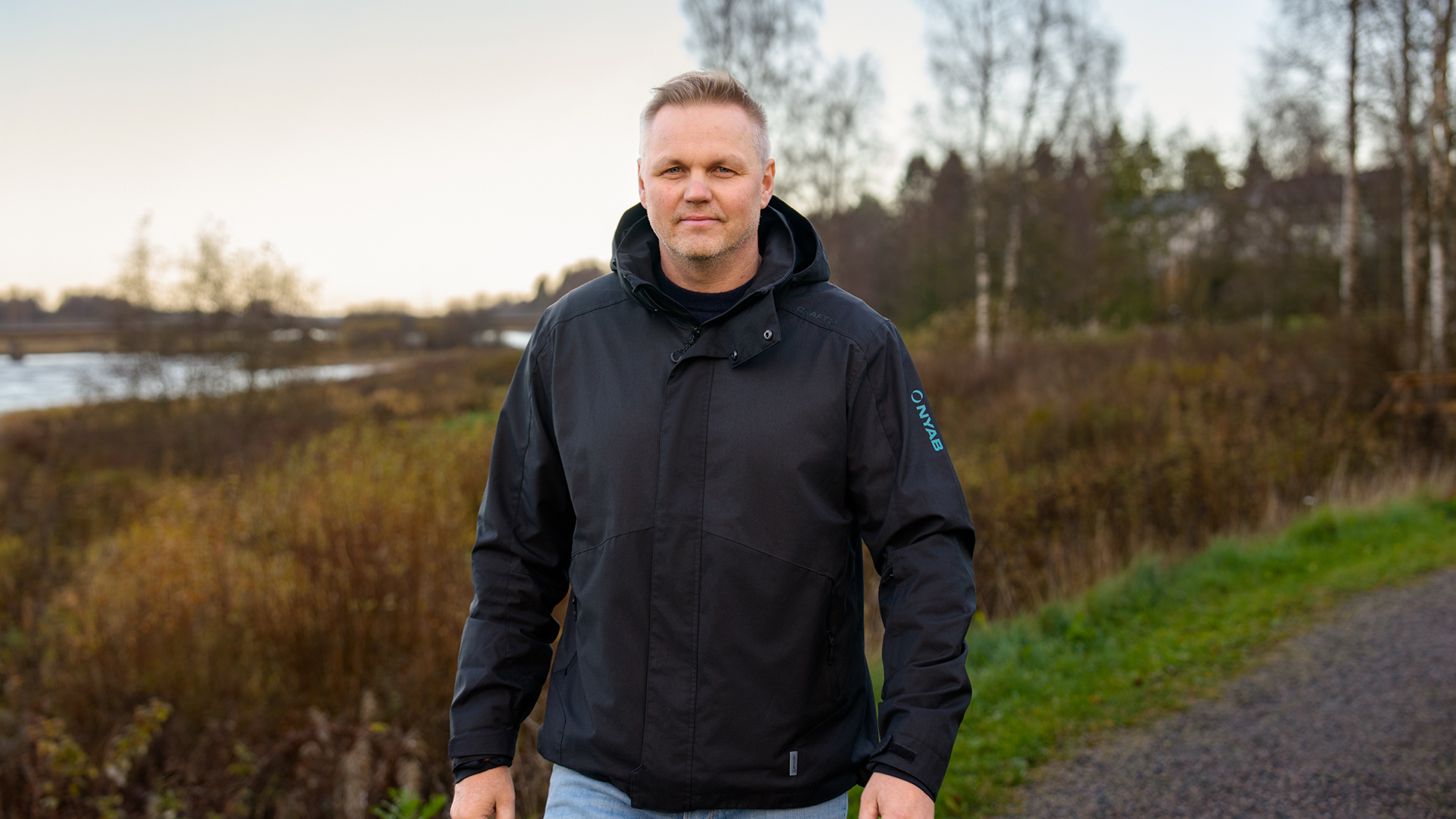
Leppilampi’s career has also taken him beyond Finland’s borders. He has previously worked in countries including Germany and the Maldives, and through NYAB he spent around a year and a half working in Sweden.
The opportunity came in a straightforward manner: he was asked if he would be interested in joining a project in Sweden, and he did not hesitate to seize it.
“The strength of Finnish-Swedish collaboration lies in our ability to learn from one another and build on each other’s strengths. A bit of friendly competition also pushes us to improve,” he says.
Leppilampi also noticed differences in working cultures. In his experience, Finns tend to move directly into action, while Swedish working life often involves more discussion and meetings.
“Different ways of working are above all a strength, and often an opportunity to learn,” he notes.
International collaboration, especially between Finland and Sweden, is part of everyday life at NYAB, although the extent varies depending on the role.
“I believe there are excellent opportunities here for anyone interested in international assignments,” says Leppilampi.
Text: Minttu Manninen, Duunitori. Photos: Ville Suorsa.
This article was produced in commercial collaboration with Duunitorin.